



Most people buying their first armored riding shirt aren't sure what they're buying. They arrive searching for a summer jacket, or body armor, or a base layer, and the category sits awkwardly between all three. Here's what one actually is, and what to check before you spend anything.
What an armored riding shirt actually is
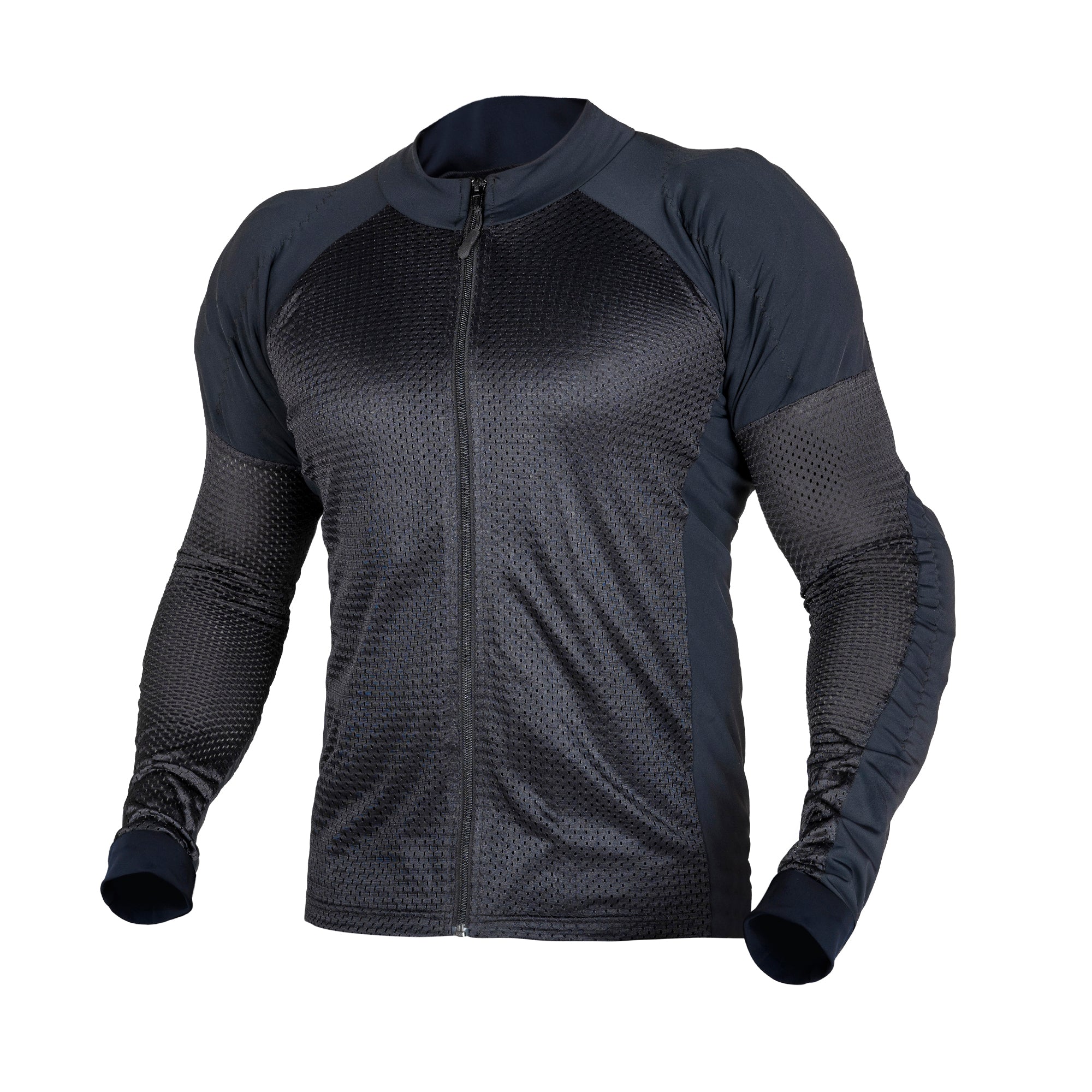
It's a close-fitting mesh garment with impact armor in pockets at the shoulders, elbows and back. That's the whole thing. No abrasion shell, no lining, none of the structure you'd find in a jacket. It isn't a compression top either, because the protectors in it are certified.
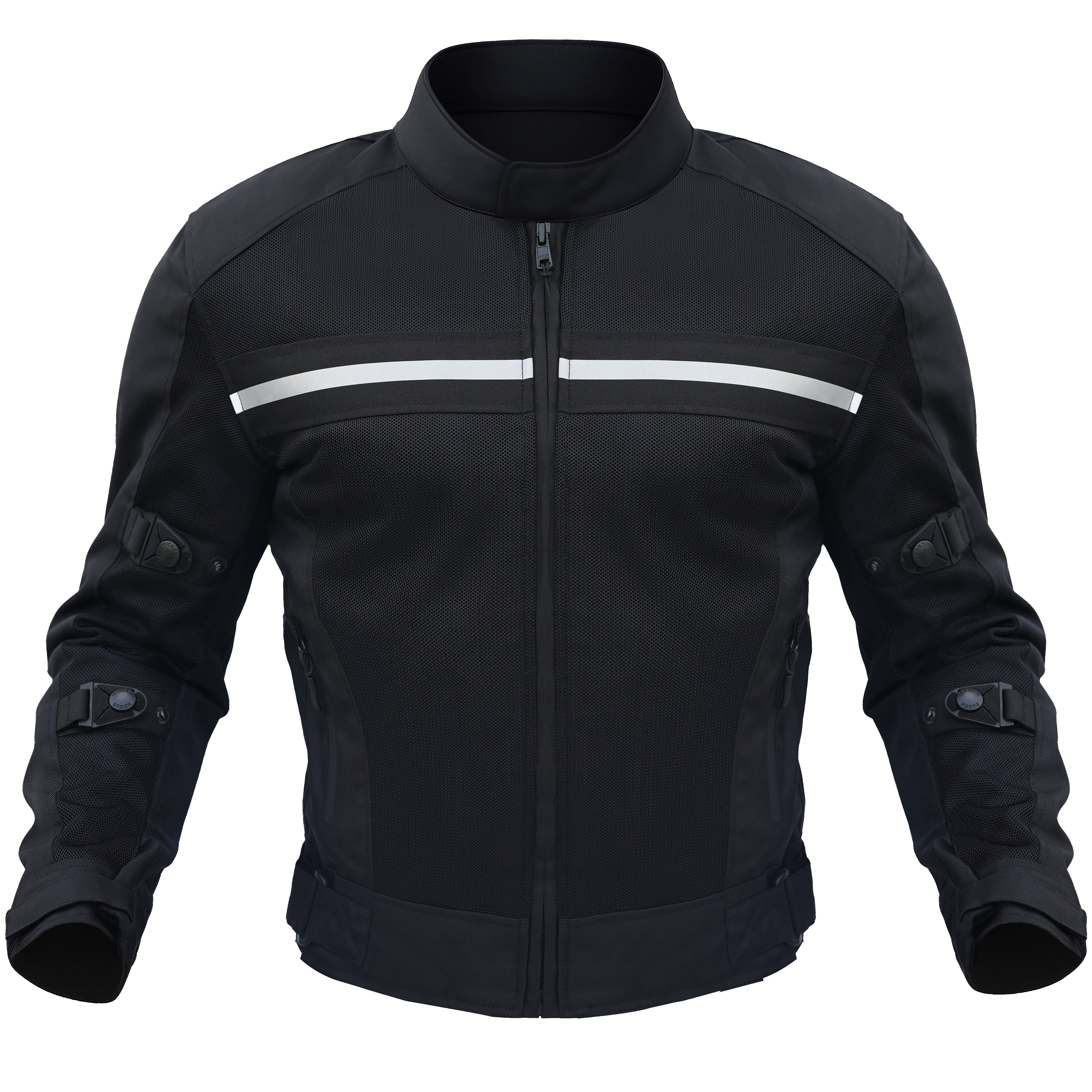
Think of it as a jacket's protection layer with the jacket taken away. You get something that vanishes under a work shirt and stays wearable in heat that would make a textile jacket unbearable. You lose abrasion resistance and any weather protection at all. Riders who own one tend to reach for it on days when the jacket would have stayed on the hook.
Five things worth checking before you buy
1. CE Level 1 or Level 2, and what's actually rated
CE Level 1 and Level 2 are the two European impact ratings for motorcycle armor. Level 2 transmits less force in standardized drop testing. Level 1 protectors tend to be thinner and more flexible, which some riders prefer under clothes. If the shirt is the only protection you've got on, Level 2 is the one to want.
Now the part that catches people out. The rating covers the armor, not the garment. A shirt with Level 2 protectors is still not a certified garment, and no mesh shirt in this category is. Sellers blur this line constantly. Ask which level, ask which pieces, and ask whether the garment itself carries any rating at all. How plainly someone answers tells you a fair amount about the rest of the listing.
2. What's actually in the pockets
Shoulders and elbows come as standard. The back is where it gets murky. Plenty of shirts ship with a plain foam insert back there while the listing still says "back protection," which is not the same thing as a certified back protector. Some don't include armor at all, just the pockets to put it in. Worth checking rather than assuming.
3. Removability
If the armor doesn't come out, you can't wash the shirt properly and you can't pack it flat. Removable pockets also mean you can swap in better protectors later if you want to. It's an easy spec to verify and one of the more useful ones.
4. Fit
An armored shirt needs to fit snugly, and not because of how it looks. Armor that shifts around isn't sitting over the joint at the moment you need it there. So these run tighter than a t-shirt by design, and guessing your usual size is how people end up posting them back.
Decide before you order how you're going to wear it. Sized against your skin, it won't go over a work shirt. If layering over clothes is the plan, go up.
5. Heat and weather
Mesh moves air, which is the entire reason the category exists. It also means no wind protection, no water resistance, nothing in the cold. This is warm-weather kit and a layering piece. Anyone describing a mesh garment as all-weather gear is describing the marketing.
How the Potomac measures up
The Potomac Protective Riding Shirt is our attempt at that checklist, so here it is against the same points.
The armor is removable CE Level 2 at the shoulders, elbows and back, pre-installed. Level 2 rather than Level 1, and a real back protector rather than a foam pad. The garment itself isn't CE certified. The armor is. We're not going to fudge that.
Construction is mesh through the chest, back and arms, with stretch panels that keep the protectors sitting where they should while you move around. Abrasion-resistant thread and double stitching go into the strategic seams. The zip runs the full length of the front, which is what makes it realistic to pull on over a work shirt in a parking lot.
It comes in nine colors: black, gray, white, beige, red, orange, yellow, pink and purple. Sizes run XS to 5XL, a wider spread than most shirts in this category manage.
Sizing
Sizing causes more returns here than anything else, so here are the numbers. Measure around the fullest part of your chest.
| Size | Chest (inches) |
|---|---|
| XS | 28-32 |
| S | 32-35 |
| M | 35-38 |
| L | 39-42 |
| XL | 43-46 |
| 2XL | 47-50 |
| 3XL | 51-54 |
| 4XL | 55-57 |
| 5XL | 58-60 |
Go up a size if you don't like a tight fit, if you're muscular or husky through the chest and shoulders, or if you plan on wearing something underneath or pulling the Potomac over work clothes.
Land right on a boundary and you should size up. The armor still sits properly in a slightly roomier shirt, whereas a shirt that's too tight is one that stays in the drawer.
Where it isn't the right buy
Four things it won't do for you.
It's no replacement for an abrasion shell. Mesh with armor covers impact zones. In a slide it won't do what leather or heavy textile does. If you want one garment covering both jobs, buy a jacket.
The fit is snug on purpose. Riders who like a relaxed cut should size up, and anyone after something that looks loose and casual off the bike is better off with an armored hoodie.
There's no rain or cold performance. Mesh flows air in both directions. On a cool morning it needs something over it, and in the wet it does nothing for you.
5XL is thin on the ground. The chart goes that far, but the size is stocked in a limited color range and sells out first. If you're at the top of the chart, check what's actually available before settling on a color.
Who it suits
Hot-weather commuting. Stop-and-go traffic in summer, when a jacket turns into an oven. Riders who'd rather wear their protection under their clothes than over them. Safety courses. Anyone in a warm climate with a jacket they don't touch between June and September. Men and women, XS to 5XL.
Questions riders actually ask
Is this a shirt, a jacket, or body armor?
A protective shirt. Mesh, with removable CE Level 2 armor at the shoulders, elbows and back. Wear it on its own in heat, or as a protection layer under a shirt or jacket.
Is the shirt CE certified, or just the armor?
The armor is CE Level 2. That's true of mesh shirts generally, and worth knowing whoever you buy from.
Can I take the armor out?
Yes. Shoulders, elbows and back all come out, which makes washing and packing a lot easier.
Will it show under my clothes?
The close fit is what keeps it low profile. Under thin fabric you'll see the outline of the armor. Under a normal work shirt or an overshirt, most riders don't notice it.
Is it waterproof?
No. It's mesh and carries no rain rating. Pack a shell if there's weather coming.
Does it run true to size?
It runs snug on purpose. Measure your chest against the chart above, and size up if you're muscular, prefer a looser fit, or intend to layer it over clothes.
What if I get the size wrong?
Exchange it. Full terms are in our return and exchange policy. Sizing exchanges are the most common thing we deal with, so nobody's going to be surprised to hear from you.
The short version
Check the armor level and what's actually in the pockets, particularly the back. Make sure it all comes out. Measure your chest instead of guessing, and be realistic about the weather you ride in.
The Potomac Protective Riding Shirt is built to pass that list without premium-brand pricing, $72.99 to $75.99 depending on size and color as of writing. Have a look through the rest of our motorcycle gear and protective clothing while you're here.


